
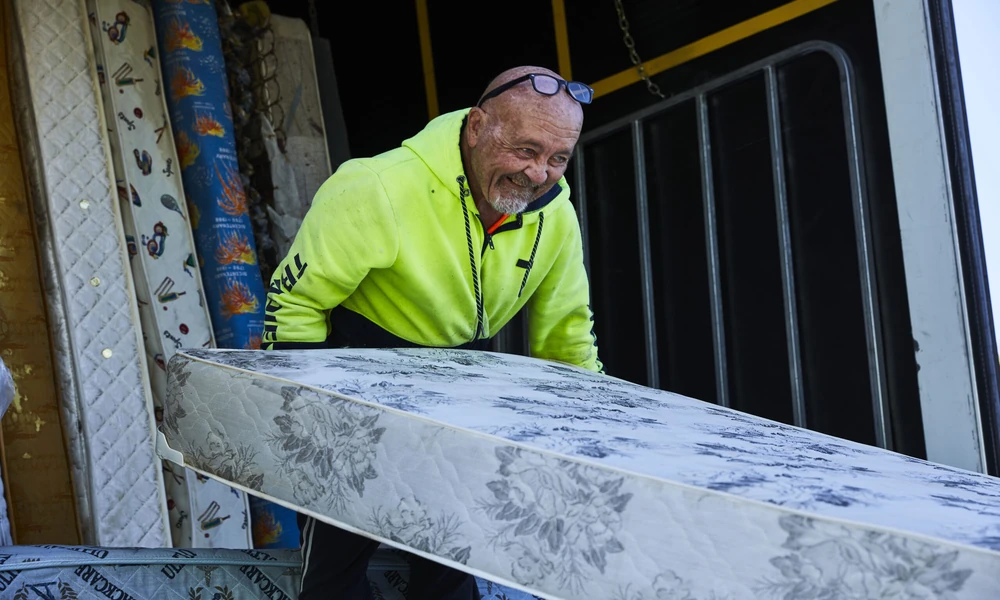

A single discarded mattress might not seem like an environmental crisis, yet millions of them pile up in landfills each year, posing a stubborn challenge for our planet. Why does recycling matter so deeply when it comes to the humble mattress?
The Environmental Impact of Mattresses Without Recycling
The Scale of Mattress Waste in Landfills
Landfills across North America receive millions of mattresses annually. These unwieldy items quickly eat up valuable landfill space because their bulky form resists compaction, causing them to float to the top and even jam landfill machinery. In Canada alone, estimates suggest that hundreds of thousands of mattresses end up buried each year, making them a significant contributor to unnecessary waste.
Decomposition Challenges and Toxicity Concerns
Mattresses are built to last, but that durability turns into a liability once they are tossed aside. Polyurethane foam, metal springs, and treated fabrics can take decades or even centuries to break down. During that slow process, mattresses may leach chemicals and contribute to the release of methane, a potent greenhouse gas. The sheer time required for decomposition means that each disposed mattress is a long-term occupant of landfill space.
The Carbon Footprint of Mattress Production and Disposal
Producing a new mattress is resource-intensive. It requires petroleum-based foams, mined metals, processed woods, and significant energy. When mattresses are thrown away rather than recycled, all those invested resources are wasted, and the cycle of carbon emissions is perpetuated through the need for new raw materials.
The Three Pillars of Mattress Recycling: Reduce, Reuse, Recycle
A sustainable path forward is built on three principles: reduce, reuse, and recycle.
Reducing Mattress Waste Volume and Degradation Time
Reducing starts with minimizing how many mattresses enter the waste stream. Effective recycling programs divert used mattresses from landfills, significantly decreasing both their volume and the environmental time bomb of slow decomposition.
Reusing Mattress Components: Innovative Applications
Instead of viewing an old mattress as a single, useless unit, recycling breaks it down into valuable components. Foam can become carpet underlay, cotton gets a second chance as thermal insulation or automotive padding, metal springs are melted and reshaped for new uses, and wood is chipped into mulch. Each repurposed element means fewer resources are drawn from nature.
Recycling Materials: From Metal Springs to Foam and Fabric
Mattress recyclers sort and process a surprising variety of materials. The result is a steady supply of secondary raw materials, lessening the demand for new manufacturing. The process not only saves landfill space but helps slow the cycle of overproduction and waste.
The Mattress Recycling Process: Step-by-Step
How does a discarded mattress transform from trash to resource?
Collection and Sorting Methods
Mattress recycling begins with collection, either scheduled pickups, drop-off centers, or partnerships with retailers. Once at a facility, mattresses are sorted by type and condition to maximize material recovery.
Material Separation Techniques
Specialized machinery and skilled technicians dismantle each mattress. Metal springs are pulled out, foams are separated, fabrics are removed, and wooden frames are stripped. Each material heads down its own processing path.
Processing and Manufacturing New Products
Once separated, materials like metal are sent for melting and remanufacturing, while foams and fabrics are cleaned and prepared for their next use. These recycled elements return to factories ready to become completely new products, closing the loop.
Benefits of Mattress Recycling for Communities and Industries
Economic Advantages and Job Creation
Mattress recycling creates local jobs at every step, from collection to processing. It also spurs economic activity by supplying low-cost raw materials to other industries, reducing reliance on virgin resources.
Environmental Gains and Resource Conservation
Every mattress recycled saves landfill space, reduces pollution, and preserves finite raw materials. The environmental gains extend far beyond just the mattress industry, rippling through sectors like automotive, construction, and manufacturing.
Raising Awareness and Building Partnerships
Recycling initiatives inspire collaboration. Experts point to programs like Recyc-Matelas mattress recycling as a model for how manufacturers, municipalities, and consumers can work together to tackle waste.
Overcoming Challenges in Mattress Recycling
Logistical and Financial Barriers
Mattress recycling is not without hurdles. Collection and transportation can be costly, especially in remote regions, and recycling infrastructure is unevenly distributed.
Consumer Participation and Education
Many consumers simply do not know that mattresses can and should be recycled. Raising awareness and building easy-to-use return programs are critical steps in boosting recycling rates.
Technological Innovations to Improve Efficiency
Emerging technologies promise to streamline the breakdown and sorting of mattresses, making recycling more profitable and environmentally impactful in the long run.
Future Outlook: Advancing Mattress Life Cycles Through Circular Economy
Emerging Trends in Sustainable Mattress Design
Forward-thinking manufacturers are designing mattresses for easy disassembly and recycling. Modular products and non-toxic materials make future recycling simpler and safer.
Policy and Regulation Impact
Cities and provinces are starting to introduce regulations mandating mattress recycling and producer responsibility, nudging the entire industry toward sustainability.
The Role of Consumers, Manufacturers, and Municipalities
Extending the life cycle of mattresses is a shared responsibility. When consumers choose to recycle, manufacturers design for longevity, and municipalities support robust collection systems, the old mattress transforms from a problem into a resource. The potential for change is in every hand that touches the process.
What Role Does Recycling Play in Extending the Life Cycle of Mattresses?

