
Ten years back, the idea of a home selling power back to the grid would have sounded strange. These days, with solar panels showing up on more rooftops, net metering has quietly turned ordinary houses into small-scale power producers. It’s not some niche engineering term anymore; it’s becoming a normal part of how homes use energy.
The Problem Net Metering Solves
Solar panels make the most power around noon, but most households use the most power early morning and evening. That mismatch used to mean wasted energy, since there was no good way to save the extra daytime power for later.
Net metering solves this with a simple billing setup. When your home makes more power than it uses, the extra goes back into the grid, and you get credited. Later, when you’re pulling power from the grid instead, those credits cover the cost. At month’s end, you’re only billed for the difference between what you used and what you sent back.
Think of it like a bank account, except instead of money, you’re putting in and taking out electricity.
Why You Need a Smart Meter for This to Work
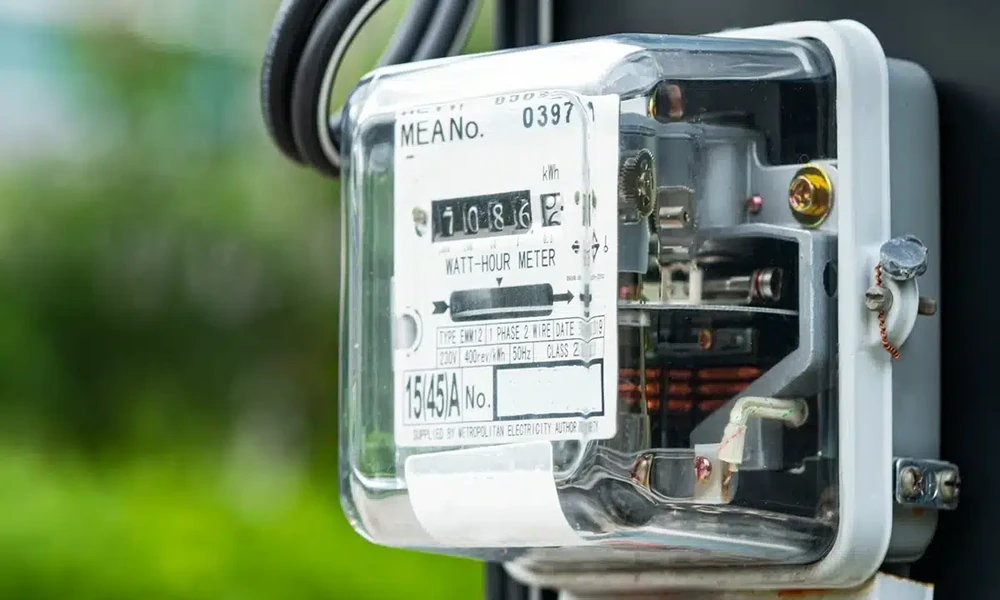
None of this is possible without accurate, two-way tracking, and that’s where the smart meter comes in. A regular old meter only counts power moving one way, from the grid into your home. It has no way to handle power flowing the other direction.
A smart meter works differently. It keeps separate records of what you’ve consumed and exported, usually checking in at short intervals instead of one number a month. This is the backbone that makes net metering work in practice. Without it, utilities would have no fair way to calculate credits, and billing disputes would be common.
These meters also send readings to the utility on their own, so nobody has to walk door to door noting numbers anymore, which cuts down on errors too.
How Net Metering and Smart Meters Work Together
It helps to picture it this way: net metering is the billing rule, and the smart meter is what makes that rule possible to enforce. One without the other doesn’t really go anywhere.
A typical home setup runs like this. Solar panels soak up sunlight during the day and produce direct current. An inverter turns that into the alternating current your appliances use. Whatever you don’t use right away gets pushed onto the grid. The meter, which reads power moving in both directions, tracks it all, and at billing time, the utility calculates the net difference.
Generate, use, send out, get credited, repeat the next day. The smart meter keeps every step of that loop honest.
Why This Matters Beyond Individual Homes
Rooftop solar, small wind setups, home battery storage, these only make sense at a wider scale if utilities can track what thousands of separate households are contributing. A few homes feeding power back is easy to manage by hand. Thousands across a city is a different story.
This is where smart metering infrastructure stops being a nice-to-have and becomes necessary. Utilities need to know, almost in real time, who’s generating power, how much, and when, so they can balance the grid without overloading a local transformer or running into voltage problems in heavy-solar areas.
In India, this push has come largely from state-level net metering rules along with broader grid modernisation efforts. Millions of smart meters have gone up across distribution companies in recent years, including units from established manufacturers like the Genus smart meter range, giving utilities the data they need to support this decentralised generation reliably.
Where Things Still Get Messy
Net metering isn’t perfectly smooth everywhere. Rules vary from state to state, and in some places, the rate you get credited for exported power isn’t quite the same as what you’d pay for imported power, which eats into the savings a little. Getting approved can take a while too, with inspections and paperwork that slow things down more than people expect.
Some older grid setups simply weren’t built with two-way power flow in mind. As more homes add solar, utilities have had to upgrade both the meters and the wiring underneath to keep voltage steady.
None of this is a dealbreaker. It’s worth knowing if you’re weighing a solar installation and want a realistic sense of approval timelines and payback.
Where This Is All Headed
The next stage of this story probably has less to do with the meter itself and more with what utilities do with the data it collects. Smart meters are already paired with analytics tools that spot faults before they cause outages, predict local demand, and help utilities plan upgrades before things get overloaded.
For homeowners, this should eventually mean simpler installations, quicker approvals, and a dashboard that shows exactly how much credit you’ve earned and when.
At the end of the day, net metering and smart metering need each other to make sense. A generous net metering policy is pointless without a way to measure things accurately, and a smart meter without a billing system behind it is just a fancy data collector. Put the two together, and individual rooftops quietly become a real, working part of the wider energy grid, one home at a time.