
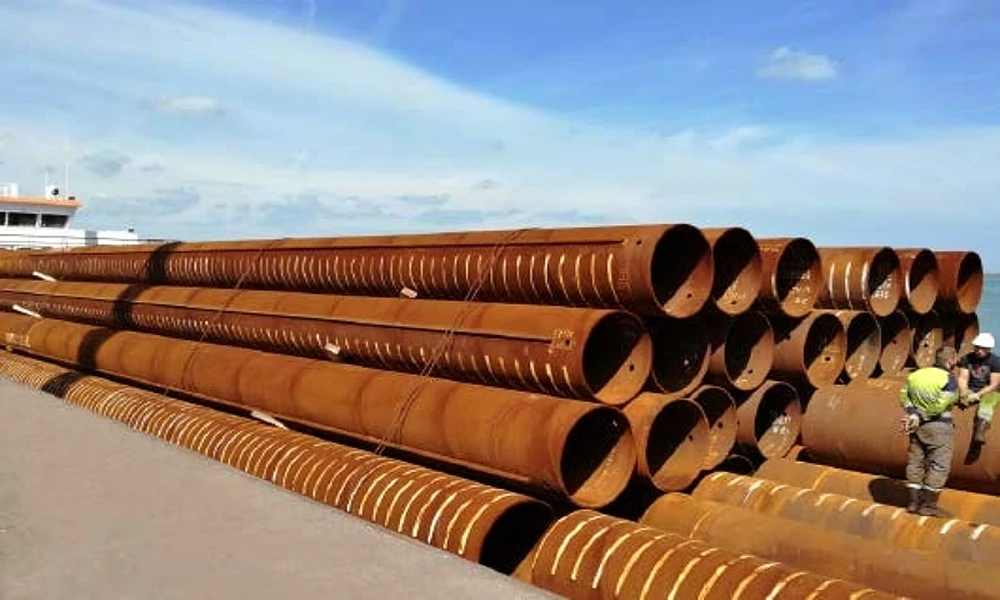

A single misstep in choosing the right piling pipe can mean the difference between a foundation that stands for generations and one that fails under pressure. In deep foundation construction, where stakes are high and the margin for error is slim, understanding what sets heavy wall piling pipe apart is essential.
Challenges in Selecting Heavy Wall Piling Pipe for Deep Foundations
Understanding the Critical Role of Piling Pipe in Structural Integrity
Piling pipes form the backbone of deep foundations, tasked with channeling the immense weight of buildings, bridges, and marine structures into stable ground. Their job does not end at supporting vertical loads; they must also withstand lateral forces from wind, earthquakes, or shifting soils. The wrong diameter or wall thickness can compromise an entire project, so precision is paramount.
Common Issues: Load Capacity, Soil Conditions, and Environmental Factors
Every site presents unique challenges. Soft soils demand pipes with greater stiffness. Coastal or riverside projects require corrosion resistance and additional wall thickness to handle both structural loads and environmental attacks. Overlook details like soil corrosivity or groundwater conditions and the consequences can be severe.
Risks of Incorrect Pipe Selection: Safety and Cost Implications
Choosing a piling pipe that is not suited to the actual load or environmental condition can result in premature failure, costly repairs, or, in the worst-case scenario, catastrophic structural collapse. Even when failure does not occur, over-specifying pipe size or grade can lead to unnecessary spending and logistical headaches.
Key Specifications to Evaluate When Choosing Piling Pipe
Diameter and Wall Thickness: Matching Structural Requirements
Selecting the correct diameter and wall thickness is far from arbitrary. These parameters must align with the engineered load requirements and site conditions. For example, smaller diameters (4 to 6 inches) with thinner walls suit micro-piling and underpinning, while large-scale foundations and caissons demand pipes upwards of 30 inches and walls up to a full inch thick.
Material Grades: Decoding ASTM A252 Grade 1, 2, and 3
Not all steel is created equal. ASTM A252 sets the benchmark for pipe pile quality, with Grade 1 offering a minimum yield of 30,000 psi, Grade 2 at 35,000 psi, and Grade 3 at 45,000 psi. The higher the grade, the greater the strength and the heavier the loads the pipe can safely carry. Always match the grade to the demands of your foundation plan.
Welded vs. Seamless Pipe: Advantages and Limitations
Welded piling pipe is prevalent in large diameters thanks to cost-effectiveness and availability, while seamless pipe offers superior uniformity and is often chosen for critical applications or where bending is a concern. Both types can meet ASTM standards, but their selection depends on project-specific priorities.
New, Surplus, and Used Pipes: Quality Considerations and Cost Benefits
Budget constraints often lead contractors to consider surplus or quality used pipe. As long as the pipe is graded and inspected for structural integrity, used material can deliver outstanding value. However, new pipe might be non-negotiable for projects with strict quality or traceability standards.
Types of Piling Pipes and Their Applications
Structural piling pipes are engineered for demanding driven and bored foundations. Micro-piling pipe serves tight or load-sensitive spaces that can’t accommodate larger tubes. In contrast, pile casing and spiral weld or ERW (electric resistance welded) pipes are chosen for caissons, boreholes, and projects requiring large diameters or high volumes. Each type brings specific strengths to its intended application, ensuring that every foundation gets the support it needs.
Assessing Load and Site Conditions for Optimal Pipe Selection
Engineers must analyze both vertical and lateral load requirements, as well as the depth and stability of soil strata. Environments exposed to water or chemicals require additional protection through coatings or specialty alloys. The harshness of marine sites, for instance, can quickly degrade unprotected steel, so selecting the right finish and thickness is just as crucial as choosing the core material.
Fabrication and Preparation: Ensuring Pipe Readiness for Installation
Off-the-shelf pipe rarely arrives jobsite-ready. Cutting to custom lengths, precision beveling for welds, splicing, or adding driving shoes and end plates all ensure a seamless installation. Protective coatings, threading, and welding further enhance pipe performance, adapting each pile to the project’s unique specifications.
Sourcing and Logistics: Finding the Right Supplier and Managing Delivery
Not every supplier can meet the demands of deep foundation work. When evaluating inventory, look for a broad selection of new, surplus, and used stock in various diameters and grades. Geographic proximity matters too, especially for heavy goods, delivery across Montreal and Quebec should be timely and reliable. Importantly, communicate your pile schedule (diameter, wall thickness, grade, and length) to help suppliers like Stealth Pipe and Steel piling pipe match your requirements without delay.
Actionable Steps to Select the Right Heavy Wall Piling Pipe
– Consult closely with engineers and construction professionals to outline the precise load, soil, and environmental demands.
– Verify that each pipe’s grade, size, and fabrication features align with project drawings and specifications.
– Request detailed quotes and compare offerings for quality, price, and delivery logistics.
– Confirm that the supplier can handle custom fabrication or site-ready preparation to minimize delays during installation.
Future-Proofing Deep Foundation Projects with Proper Pipe Selection
A foundation’s durability depends on more than just initial installation. Selecting piling pipe built for longevity, incorporating the latest advances in pipe technology, and planning for regular inspection and maintenance all contribute to structural resilience. With careful consideration at every stage, your deep foundation can stand up to both time and the elements, ensuring safety and value for decades to come.

