
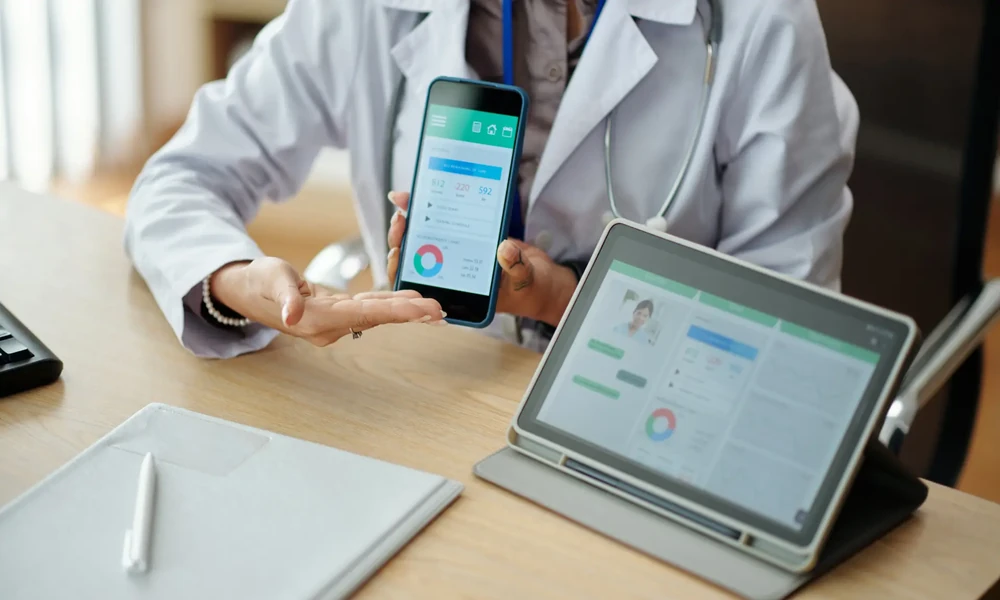

Digital platforms have emerged as a significant component of today’s healthcare world. Technology has transformed the way healthcare services are provided and the way that healthcare professionals work, all the way from telemedicine to online appointment platforms, and from electronic health records to professional networking platforms. Such changes are not only making it easier for patients to get care, but they are also providing a new avenue for health professionals to develop their skills, networks and career prospects.
Digital transformation is influencing the healthcare workforce by changing how professionals communicate, manage information, support patients, and develop their careers. As organizations introduce telehealth services, electronic records, online training, and specialized digital systems, employees may need to combine traditional healthcare knowledge with greater technological awareness. Staying open to new tools and developing relevant digital skills can help professionals adapt to evolving responsibilities while contributing effectively to increasingly connected healthcare environments.
Taking a step toward a more connected healthcare system.
Healthcare professionals can now communicate more easily on digital platforms and share information. Digital systems provide doctors, nurses, technicians, administrators and other staff with a way to access relevant information and coordinate care. This can minimise the amount of unnecessary paperwork and streamline coordination among various teams.
Expanding Telehealth Opportunities
Telehealth platforms have revolutionised the way patients reach healthcare providers. For certain consultations, it is now possible to support patients without having to visit them physically for each concern, as professionals can be supported remotely.
This has enabled healthcare professionals who are at ease carrying out virtual check-ins, digital communication, online scheduling, and remote patient care. It has also increased the flexibility in health professions.
Supporting Better Access to Information
With the help of electronic health record platforms, healthcare professionals can now access patient information more efficiently, as long as they are authorised to do so. Digital systems can be utilised to check out applicable records and update information as opposed to using solely physical documents, for healthcare teams.
This also implies creating demand for staff with healthcare information systems, data handling and privacy considerations, and digital workflows.
Creating Demand for Digital Skills
The role of technology is becoming more integral in the life of healthcare professionals. The foundational skills of digital literacy are increasingly relevant for a variety of roles, and specialised skills like health informatics, data analysis, cybersecurity, or healthcare technology might be required for certain positions.
This translates to a new paradigm of career development beyond traditional clinical training. Professionals can transition to other roles and expectations in the workplace by learning relevant digital skills.
Changing Recruitment and Career Discovery
Digital platforms are also reshaping the process by which healthcare organisations hire talent. Employers can post jobs on the internet and attract job applicants from a greater distance. Meanwhile, healthcare professionals themselves can find jobs, promote their skills and experience, network with prospective employers and gain insight into various healthcare career paths on professional job boards. This can make finding a job easier, especially for those seeking a niche career.
Encouraging Continuous Learning
Platforms for online learning enable healthcare workers to follow courses, training materials, webinar programmes and other professional development without necessarily going to programme sessions. This makes it easier for employees to keep their knowledge up-to-date while on the job.
It’s even more imperative to continuously learn with evolving technology, procedures, and expectations in the healthcare industry.
New Roles Are Emerging
Digital healthcare has opened up new avenues like health informatics, telehealth coordination, healthcare data analysis, digital health support, and cybersecurity. Other jobs integrate the skills of technology into the old skill sets of healthcare, forming new job paths that did not exist in this form in the past.
Keeping the Human Element
While digital platforms are revolutionising health care, technology can’t take the place of human interaction. The skills of compassion, communication, judgment, teamwork and patient understanding continue to be vital attributes.

