
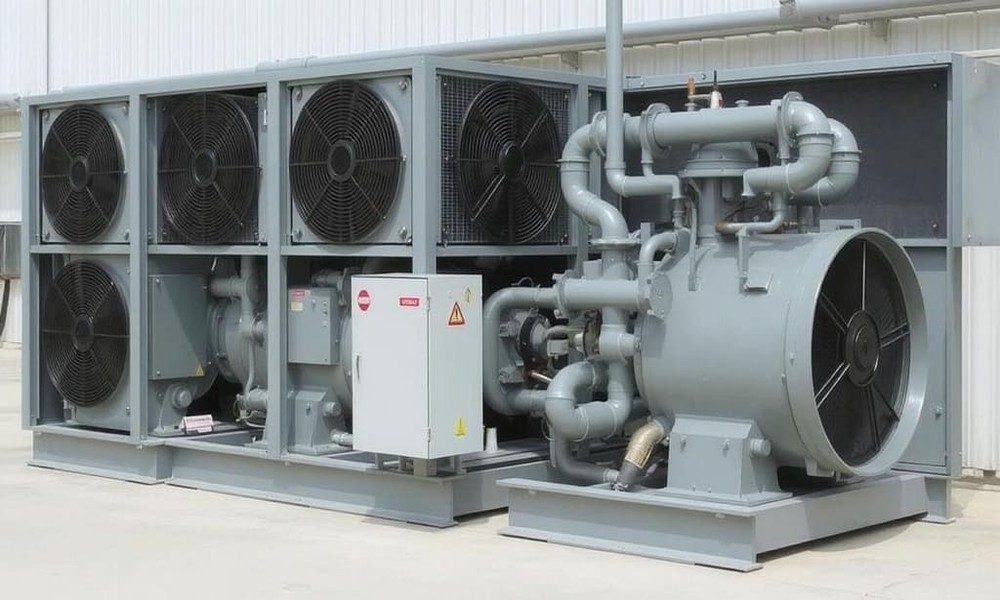

In recent years, the manufacturing landscape in India has been undergoing a quiet revolution. One of the unsung heroes of this transformation is the industrial chiller. These sophisticated machines are no longer just an accessory; they are becoming a cornerstone for efficiency, productivity, and quality control in industries ranging from pharmaceuticals to plastics, food processing, and chemical manufacturing.
With rising production demands and the push for higher standards, Indian factories are increasingly realising the importance of reliable temperature management. By integrating advanced chiller technologies, manufacturers are not only improving output but also reducing operational costs and environmental impact.
What Are Industrial Chillers?
At their core, industrial chillers in India are systems designed to remove heat from industrial processes, machinery, or products. By regulating temperature, they ensure that equipment operates within safe limits, improve product quality, and reduce downtime caused by overheating. Unlike conventional cooling methods, industrial chillers offer precision, reliability, and energy efficiency, making them indispensable in modern manufacturing plants.
There are several types of industrial chillers, but two prominent ones in India are ammonia chillers and scroll chillers. Each has unique advantages that cater to specific industrial needs.
Ammonia Chillers: Efficiency and Sustainability
Ammonia chiller manufacturers in India have seen significant growth, driven by the demand for energy-efficient and environmentally friendly cooling solutions. Ammonia (NH₃) is a natural refrigerant with high thermodynamic efficiency, which means it can absorb and transfer heat more effectively than many synthetic refrigerants.
Industries that require large-scale cooling, such as chemical plants, food processing units, and ice manufacturing facilities, are increasingly opting for ammonia chillers. These systems offer lower operational costs over time, thanks to reduced energy consumption. Additionally, ammonia is a zero-ozone-depletion substance, aligning with India’s commitment to environmentally responsible industrial practices.
Another key advantage of ammonia chillers is their ability to handle large temperature differentials. This makes them ideal for processes that involve heavy-duty machinery or high-capacity cooling, such as pharmaceutical formulation lines or large-scale beverage production.
Scroll Chillers: Compact and Versatile
While ammonia chillers are excellent for large industrial operations, scroll chillers are becoming the preferred choice for smaller plants, laboratories, and precision manufacturing units. A scroll chiller uses a scroll compressor to compress the refrigerant in a smooth, continuous motion, providing efficient cooling with minimal vibration and noise.
In India, scroll chillers are particularly popular in the plastics, laser cutting, and printing industries. These industries require precise temperature control to maintain product integrity. For example, in injection moulding, even slight temperature fluctuations can result in defective products. Scroll chillers provide the consistent cooling required to maintain uniformity and reduce wastage.
The compact design of scroll chillers also makes them suitable for factories with limited space. Many Indian manufacturers are upgrading their production lines with scroll chillers to achieve both efficiency and flexibility, without the need for extensive infrastructure changes.
Transforming Manufacturing Practices
The adoption of industrial chillers in India is not just about cooling machinery-it is fundamentally changing how factories operate. Here are a few ways these systems are revolutionising manufacturing:
- Enhanced Product Quality: Consistent temperature control reduces defects in heat-sensitive products like pharmaceuticals, beverages, and electronics. This ensures that the products meet international standards, boosting India’s manufacturing competitiveness.
- Energy Efficiency and Cost Savings: Modern chillers, especially ammonia-based systems, consume less power than conventional cooling methods. This not only reduces electricity bills but also supports India’s larger goal of industrial sustainability.
- Reduced Downtime: Overheating is a major cause of machinery breakdowns. Industrial chillers help maintain optimal operating conditions, minimising unplanned downtime and ensuring smoother production schedules.
- Environmental Compliance: With stricter regulations on emissions and refrigerants, using eco-friendly chillers like ammonia chillers helps factories stay compliant while adopting greener practices.
- Adaptability Across Industries: From food and beverage processing to chemical manufacturing and electronics, the versatility of industrial chillers allows them to be integrated into a wide range of production processes.
Choosing the Right Chiller for Your Facility
Selecting the appropriate chiller depends on several factors, including the type of industry, production scale, space availability, and budget. Ammonia chiller manufacturers in India often work closely with factories to design custom solutions that meet specific cooling requirements. For smaller-scale operations or precision tasks, scroll chillers offer a balance of performance, reliability, and compactness.
Additionally, maintenance and service support are critical considerations. Many Indian manufacturers are now offering full-service packages that include installation, monitoring, and preventive maintenance, ensuring that the chillers operate efficiently throughout their lifecycle.
The Future of Industrial Cooling in India
As India continues to industrialise and embrace automation, the demand for advanced cooling solutions is expected to grow. Smart chillers with IoT integration and predictive maintenance are already emerging in the market, allowing factories to monitor performance in real-time and optimise energy usage.
Moreover, the shift towards sustainable and green manufacturing practices means that environmentally friendly chillers, particularly ammonia-based systems, will play an even larger role. Manufacturers are increasingly recognising that investing in high-quality industrial chillers is not just a cost-it’s a strategic move to enhance productivity, reduce waste, and stay competitive globally.
Conclusion
The revolution of industrial chillers in India is a testament to how modern technology can elevate traditional manufacturing practices. By providing precise temperature control, energy efficiency, and adaptability, these systems are transforming industries and helping Indian manufacturers compete on a global scale. Whether it’s large-scale cooling with ammonia chillers or compact, efficient solutions with scroll chillers, businesses now have the tools to optimise operations, reduce costs, and improve product quality.
For any manufacturing facility in India, investing in the right industrial chiller is no longer optional-it is essential for sustainable growth, operational excellence, and long-term success.

